


All You Need to Know About Palazzo Pitti
Florence is certainly one of the best known cities in the world. Every year, millions of people visit the “cradle of the Renaissance”, admiring the leading museums in the city, strolling through its streets and getting lost among monuments, churches, palaces and places of interest.
Florence has so much to offer in all seasons of the year, and even in autumn or winter, it is a perfect destination. To fully enjoy its beauty, you need to organize your itinerary well and choose the places to visit.
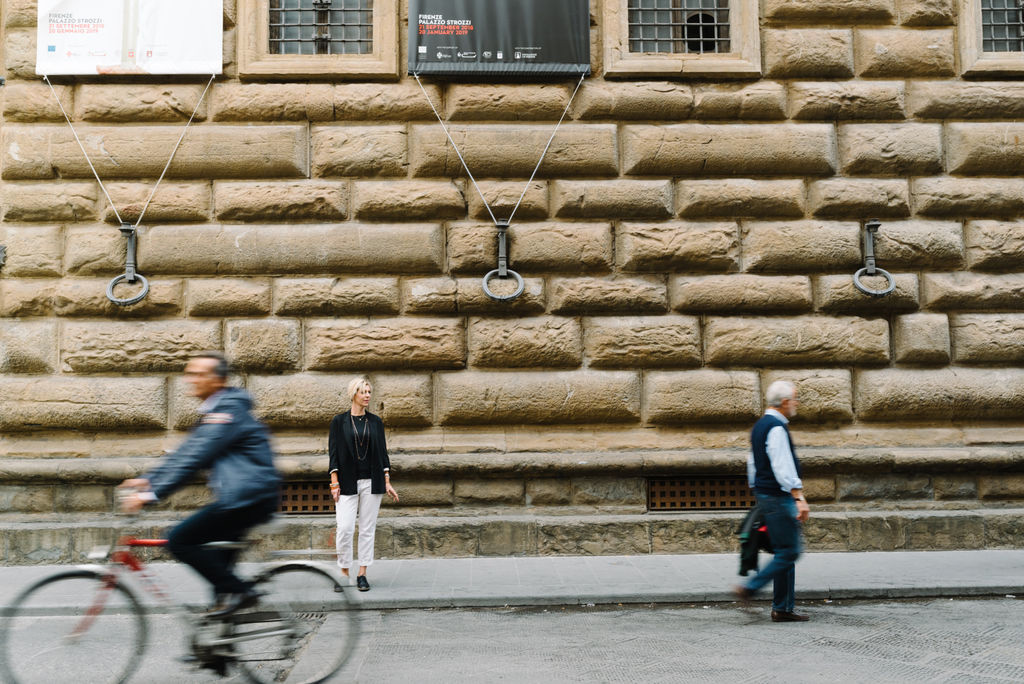

Palazzo Pitti one of the unmissable stops
Crossing the Ponte Vecchio, in the Oltrarno area, we reach Palazzo Pitti: one of the major Florentine attractions. Inside, there are several museums, including the Palatine Gallery, the Gallery of Modern Art and the Boboli Gardens.
Like many places in Florence, Palazzo Pitti is a treasure trove of beauty and awe, which will offer new impressions and wonders on every visit. Palazzo pitti is located in the Oltrarno area where the artisan shops of Florence are located, which we recommend you visit.
This huge palace is one of the greatest architectural examples in Florence: it was originally built by the Pitti family in 1457 based on a design by Filippo Brunelleschi.
In 1549, it was sold to the Medici, thus becoming the family residence and a symbol of the consolidated power of the Medici over Tuscany.
In 1565, Vasari built the famous Vasari Corridor to connect Palazzo Pitti with Palazzo Vecchio and the Uffizi.
It then became the Palace of two other dynasties, that of the Habsburg-Lorraine (successors of the Medici from 1737) and the Savoy, who lived there as royals of Italy from 1865.
What to see at Palazzo Pitti
Today, Palazzo Pitti hosts some of the most important museums in Florence: on the first floor, there is the Palatine Gallery with a large collection of 16th and 17th century paintings and the Royal Apartments with period furnishings dating back to the 19th century.
On the ground floor, and on the mezzanine floor, there is the Treasury of the Grand Dukes (known as the Silver Museum), which houses the large collection of precious objects that belonged to the Medici. The Gallery of Modern Art is located on the top floor and houses a wonderful collection of paintings, including Tuscan painters of the nineteenth and twentieth centuries.
In the Palazzina del Cavaliere, detached from the palace and nestled in the Boboli Gardens, lies the Porcelain Museum.
The Palazzina della Meridiana houses the Museum of Fashion and Costume (known as the Costume Gallery), which contains clothes and fashion artifacts retracing the history of the last 300 years.
Definitely worth seeing is Raphael’s La Velata, an oil painting on canvas by Raphael (Raffello Sanzio), datable to 1516. The veil was placed on the hair of a woman who was therefore married, a woman whose identity remains uncertain. According to Giorgio Vasari, however, it was probably the portrait of the woman loved by Raphael until his death, Margherita Luti known as la Fornarina.
Painted by Raphael after he moved from Florence to Rome, the painting is one of the peaks of the Urbino master’s portraiture.
Staying near Palazzo Pitti
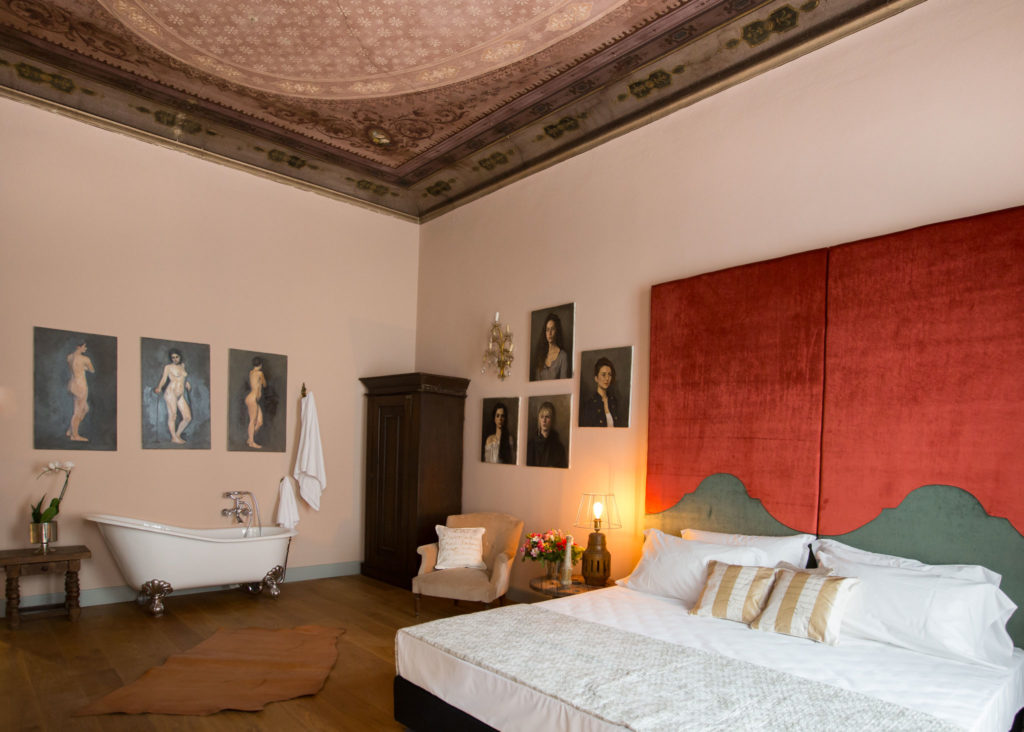
Palazzo Pitti is located in the Oltrarno area, a short distance from Ponte Vecchio. The Oltrarno district is one of the most authentic in Florence where you can find the genuine shops and craft workshops in the city, stroll among the restaurants and trendy clubs. Choosing a hotel or an elegant bed and breakfast near Palazzo Pitti, such as Soprarno Suites Boutique B&B, means combining the convenience of very central accommodation with timeless class and elegance, to give you the ultimate comfortable experience.

The Boboli Garden
We also advise you to take some time to visit the Boboli Gardens: created as the Grand Ducal garden of Palazzo Pitti, it welcomes over 800,000 visitors every year, and is one of the most important examples of an Italian garden in the world, a real open-air museum, on account of its architectural-scenic setting and the collection of sculptures ranging from Roman antiquities to the twentieth century.
In the gardens, there are gravel paths leading to ponds, fountains, nymphaeums, temples and caves: the importance of the statues and buildings in the garden, such as the eighteenth-century Kafeehaus (a rare example of Rococo style in Tuscany), is noteworthy and allows you to enjoy the view over the city, or the Limonaia, still in its original color.
The gardens as a whole have a somewhat elongated triangular configuration, with steep slopes and two almost perpendicular axes that cross near the Fountain of Neptune that stands out against the panorama.
Part of the garden is dedicated to the collection of Camellias, begun in the seventeenth century and which today, thanks to the work of the gardeners, has been partially salvaged after a period of decline.